
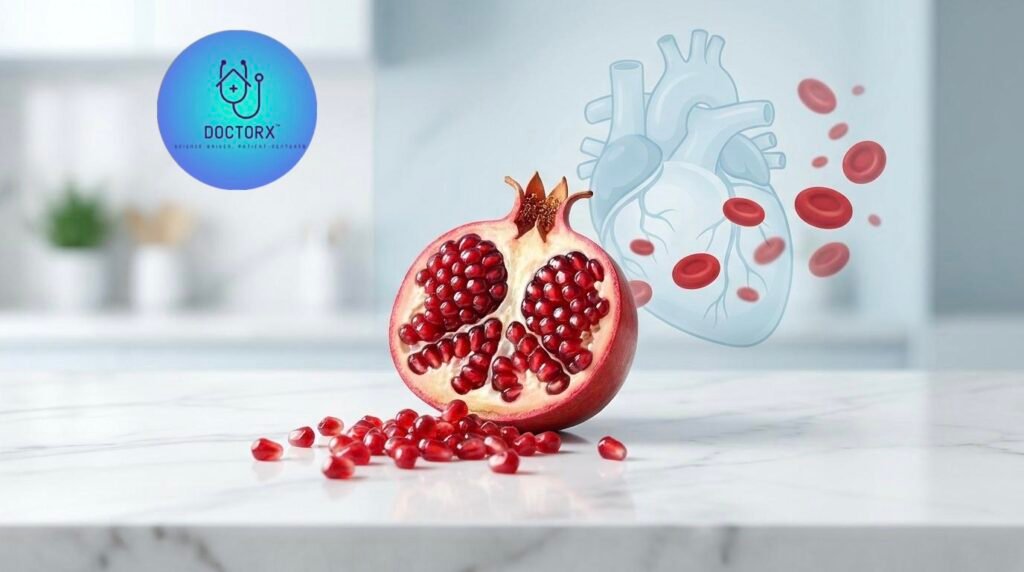
Pomegranate is one of nature’s most potent vascular protectors, delivering rare polyphenols that directly support arterial flexibility and cerebral blood flow.
The Secret Chemistry: Punicalagins and Punicic Acid
Pomegranates owe their superfood status to two unique compounds rarely found elsewhere in nature:
Punicalagins: Extremely potent antioxidants found in the juice and peel. Research indicates that pomegranate juice has up to three times the antioxidant activity of red wine and green tea.
Punicic Acid: A specialized polyunsaturated conjugated fatty acid (found in pomegranate seed oil) that helps balance lipid profiles and control systemic inflammation.
1. Cardiovascular Shield: Protecting Arteries & Pressure
Your blood vessels rely on a delicate inner lining called the endothelium. When oxidative stress and inflammation degrade this lining, arteries stiffen and accumulate plaque. Pomegranate acts on multiple fronts to protect your heart:
Boosts Nitric Oxide (NO): Pomegranate compounds stimulate nitric oxide synthase, relaxing smooth muscle walls and keeping arteries wide and pliable.
Prevents LDL Oxidation: Cholesterol only turns into dangerous arterial plaque after it oxidizes. Punicalagins shield LDL particles from free-radical damage.
Modulates Blood Pressure: Clinical trials show that regular consumption of unsweetened pomegranate juice can lower both systolic and diastolic blood pressure within weeks by acting as a natural ACE (angiotensin-converting enzyme) inhibitor.
2. Brain Power: Memory, Neuroprotection & Urolithin A
What benefits the heart almost always benefits the brain. By enhancing microvascular blood flow, pomegranate ensures neurons receive a steady influx of oxygen and glucose.
Neuroprotective Urolithins: When you digest the ellagitannins in pomegranate, your gut microbiome transforms them into Urolithin A. This compound induces mitophagy—the clearing out of aged, dysfunctional mitochondria in brain cells—helping protect against age-related neurodegeneration.
Combats Neuroinflammation: Chronic low-grade inflammation is a primary driver of brain fog and memory decline. Pomegranate polyphenols help cross the blood-brain barrier to reduce neuroinflammatory markers.
Sharpens Recall: Studies on adults with mild memory complaints found that daily pomegranate intake significantly improved verbal and visual memory performance.
Whole Fruit vs. Juice: What’s the Best Choice?
Fresh Arils (Best for Daily Health): Eating whole arils provides fiber (roughly 7g per cup), which slows sugar absorption and nourishes beneficial gut bacteria.
Pure Unsweetened Juice (Best for Rapid Antioxidants): Delivers a concentrated dose of punicalagins. Keep servings to 120–180 ml (4–6 oz) daily to avoid spiking blood sugar. Avoid bottled cocktails loaded with added cane sugar.
The Takeaway
“Small, intentional additions to your daily plate create profound long-term resilience for your vital organs.”
Pomegranate isn’t just an ornamental fruit; it is targeted nutritional fuel for your cardiovascular and cognitive systems. By enjoying a handful of arils or a small glass of pure juice, you support flexible arteries, sharp cognition, and cellular longevity.
Medical Disclaimer: This article is for educational awareness and does not replace medical advice. Consult your healthcare provider before introducing concentrated juices or supplements, particularly if you are on prescription blood thinners, blood pressure agents, or statin therapy.